DTF vs sublimation printing are the two leading custom print methods in 2026 — and for businesses in Cocoa, FL, choosing the wrong one means wasted cost, rejected orders, or prints that fade under Florida’s harsh sun and humidity. DTF (Direct to Film) works on virtually any fabric, including cotton, dark garments, and blended materials, making it the more versatile commercial choice for most Brevard County businesses. Sublimation, by contrast, delivers superior durability and seamless all-over prints — but only on light-colored polyester or poly-coated hard surfaces like mugs and phone cases. Whether you’re a retail store, event organizer, restaurant, or contractor near Cape Canaveral needing branded apparel or promotional merchandise, this guide breaks down fabric compatibility, print durability, cost differences, and which method fits your specific business needs.
DTF vs Sublimation Printing in Cocoa, FL: Which Method Is Right for Your Florida Business in 2026?
If you’re running a printing or branding business on Florida’s Space Coast, the DTF vs sublimation debate is one you need to settle in 2026. Both methods produce vibrant, professional-quality prints — but they work very differently and serve different business needs. Whether you’re printing custom t-shirts for a Cocoa event or producing promotional products for clients across Brevard County, choosing the right method directly affects your cost, output quality, and profit margins.
What Is the Difference Between DTF and Sublimation Printing?
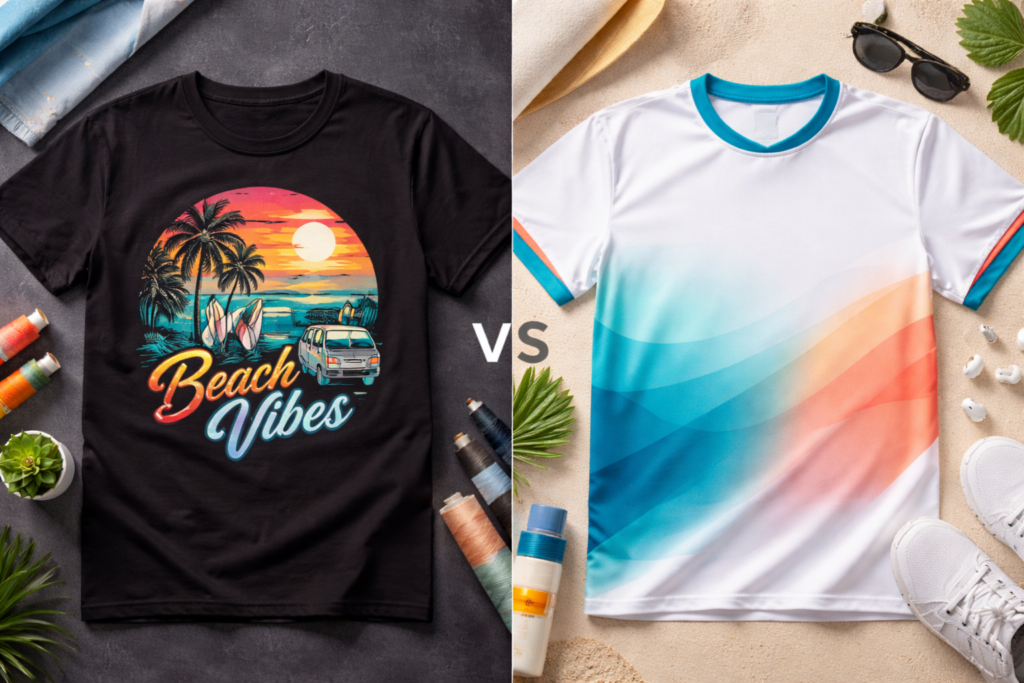
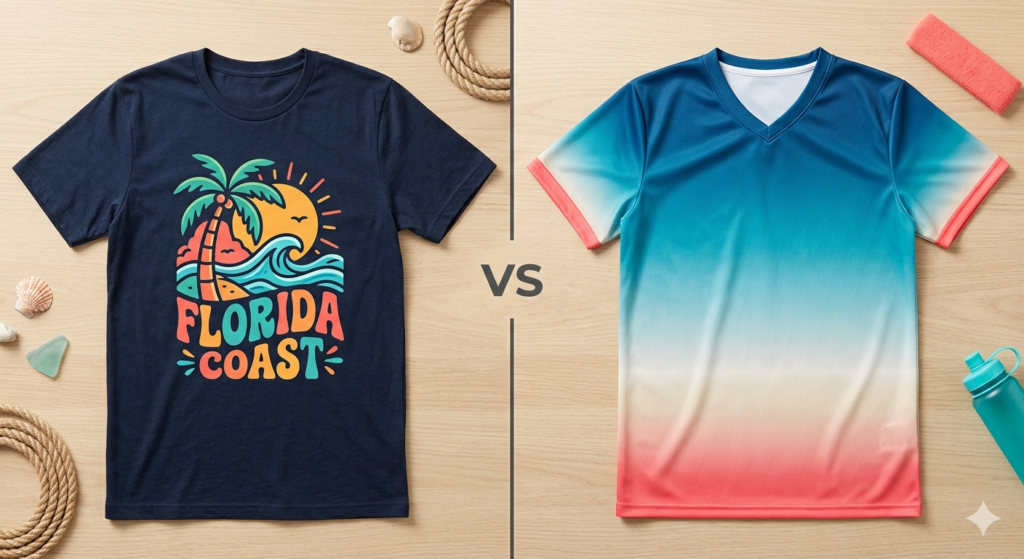
DTF (Direct to Film) printing transfers ink from a PET film onto fabric using adhesive powder and heat — the design sits on top of the fabric with a slight texture. Sublimation printing converts ink into gas under heat, bonding it permanently into polyester fibers. The core difference: DTF works on almost any fabric including cotton, while sublimation is limited to light-colored polyester or poly-coated surfaces.
DTF is a newer, more versatile technology. Your design is printed onto special film, coated with adhesive powder, cured, then heat-pressed onto the garment. The print layer bonds firmly on top of the fabric with no special blank requirements.
Sublimation produces a print that is literally inside the fabric. Because dye bonds with polyester at the molecular level, there is zero hand-feel the print is as smooth as the fabric itself. A professional Sublimation Printer uses heat and specialized inks to create permanent, high-resolution graphics on polyester apparel and coated promotional products. According to industry data, the global dye sublimation printing market was valued at $14.9 billion and is growing at an 11.3% CAGR through 2030, driven largely by demand for sportswear and promotional goods.
For large-format printing businesses in Cocoa, FL, understanding this core difference determines which method fits your client base and product mix.
Which Is Better for Florida Businesses — DTF or Sublimation Printing?
For most Florida businesses, the answer depends on fabric type and order type. DTF is better if you print on cotton, dark garments, or mixed fabrics. Sublimation is better for all-over polyester prints, performance sportswear, and hard-surface promotional items like mugs and phone cases. Many Brevard County print shops use both methods together to cover all client needs.
Florida’s business environment is unique. Outdoor events, beachside branding, tourism merchandise, and athletic apparel all create demand for both methods. Businesses around Cape Canaveral and Merritt Island frequently order branded performance wear for tech industry staff — a natural sublimation use case given the polyester-heavy fabric preference.
DTF, however, gives you the flexibility to say yes to more clients. Cotton hoodies, canvas bags, dark-colored event uniforms — DTF handles them all without fabric restrictions. For Cocoa, FL businesses that can’t afford to turn away mixed-fabric orders, DTF is the more commercially practical choice.
What Fabrics Can DTF vs Sublimation Print On in Cocoa, FL?
DTF printing works on cotton, polyester, blends, denim, nylon, canvas, and even leather — making it the most fabric-versatile printing option available. Sublimation is limited to 100% polyester or polyester-coated hard surfaces. It cannot be used on cotton, dark fabrics, or untreated natural fibers. For Brevard County businesses printing on a wide variety of blanks, DTF removes the guesswork.
DTF compatible materials:
- 100% cotton and cotton-polyester blends
- Polyester, fleece, nylon, canvas, and denim
- Dark and light-colored garments (white ink included)
- Leather and synthetic accessories
Sublimation compatible materials:
- 100% white or light-colored polyester apparel
- Poly-coated hard surfaces: mugs, phone cases, mousepads, keychains
- Sportswear, activewear, and swimwear
- Polyester-based fabric banners and displays
A quality Sublimation Printer is essential for producing vivid colors on these polyester-based products and promotional items. For businesses in Cocoa, FL and Rockledge serving both custom apparel and promotional product clients, sublimation opens the door to hard-surface merchandise while DTF keeps your apparel production broad and restriction-free.
How Durable Is DTF vs Sublimation Printing in Florida's Heat and Humidity?
Sublimation prints are the most durable option — the dye bonds permanently with polyester fibers and will not crack, peel, or fade even after hundreds of washes or prolonged outdoor exposure. DTF prints are highly durable when cured correctly, but can develop fine surface cracks over repeated washing on cotton-poly blends. Both methods perform well in Florida’s climate when applied with proper technique.
Florida’s heat and humidity put printed products through a real stress test. Outdoor banners near Titusville, branded uniforms at Brevard County sports events, and beach merchandise around Cape Canaveral all need to hold up under intense UV exposure and moisture.
Follow these durability best practices for Florida conditions:
- For sublimation: Use blanks with at least 95% polyester content — lower poly counts produce washed-out colors over time
- For DTF: Ensure full powder adhesion and proper cure temperature (280–320°F) before heat pressing
- For both: Instruct clients to turn garments inside out and wash in cold water to extend print life significantly
- For outdoor signage: Sublimation on polyester fabric is the preferred method for banners exposed to direct Florida sun
Which Printing Method Is Cheaper for Brevard County Businesses in 2026?
DTF has lower startup costs and more affordable cost-per-print for small, mixed-fabric runs. Sublimation has lower material costs at scale for high-volume polyester orders. For Brevard County businesses handling varied short-run orders, DTF offers better per-print flexibility. For businesses specializing in high-volume polyester sportswear or promo goods, sublimation wins on long-term unit economics
DTF vs Sublimation: Full Feature & Cost Comparison
Feature | DTF Printing | Sublimation Printing |
Fabric compatibility | All fabrics | Polyester only |
Works on dark garments | ✅ Yes | ❌ No |
Works on cotton | ✅ Yes | ❌ No |
Print feel | Slight texture on fabric | Smooth — ink inside fiber |
Color vibrancy on dark fabric | Excellent | Not possible |
Startup equipment cost | Moderate | Moderate to High |
Cost per unit — small run | Lower | Higher |
Cost per unit — large run | Moderate | Lower |
Hard surface printing | ❌ No | ✅ Yes (mugs, cases, tiles) |
Wash durability | High with proper care | Excellent — permanent |
All-over full-garment print | Limited | ✅ Excellent |
Eco-friendliness | Moderate | Better (less waste) |
Best use case | Cotton apparel, mixed fabric orders | Sportswear, promo products, all-over polyester |
Reaching local customers goes well beyond ranking on Google. A multi-channel approach is what separates businesses that stay steady from those that grow consistently year over year.
Conclusion
Choosing between DTF vs sublimation comes down to your product mix and client base. If your Florida business needs fabric versatility and the ability to print on cotton and dark garments, DTF is the stronger commercial choice. If you’re focused on all-over polyester prints, sportswear, or branded hard goods, sublimation delivers unmatched quality and long-term durability. Direct Graphix in Cocoa, FL serves businesses across Brevard County with professional large format printing solutions — so you always get the right method for the job. Contact Direct Graphix today to get expert guidance or request a custom quote for your next printing project.
Frequently Asked Questions
Q1: Can sublimation printing be used on cotton shirts?
No. Sublimation only works on polyester or polyester-coated surfaces. On cotton, the dye will not bond properly and will wash out almost immediately. If you need to print on 100% cotton shirts, DTF (Direct to Film) is the correct method. DTF works on cotton, blends, and virtually any other fabric without any surface preparation or special blanks required.
Q2: Is DTF printing better than sublimation for outdoor conditions in Florida?
Both methods handle outdoor conditions when applied correctly, but sublimation is more resistant to long-term UV exposure and humidity because the dye bonds into the polyester fiber at a molecular level. DTF is highly durable but benefits from proper curing and wash care instructions for clients. For polyester fabric banners and outdoor sportswear in Florida’s climate, sublimation is typically the stronger long-term choice.
Q3: What is DTF sublimation printing used for in Cocoa, FL businesses?
In Cocoa, FL and across Brevard County, DTF printing is most commonly used for custom t-shirts, branded uniforms, event merchandise, and cotton-blend garments. Sublimation is frequently used for polyester sportswear, team uniforms, promotional mugs, keychains, and all-over-print activewear. Many local print businesses use both methods depending on the client order type and fabric requirements.
Q4: How long do DTF prints last compared to sublimation?
Sublimation prints last as long as the fabric itself since the ink is embedded in the polyester fibers — there is nothing to peel or crack. DTF prints are also long-lasting when properly cured, but may show fine surface cracks after 50+ aggressive washes if adhesion was inconsistent. Turning DTF garments inside out during machine washing significantly extends the print’s lifespan.
Q5: Which printing method is better for a small business in Brevard County?
For a small business in Brevard County starting with custom apparel, DTF printing offers the most commercial flexibility. It works on all fabric types, handles small runs without minimum order requirements, and has no blank restrictions. As your product range grows to include sportswear, branded promotional hard goods, or all-over polyester prints, adding sublimation capability for that specific product line makes strong business sense.