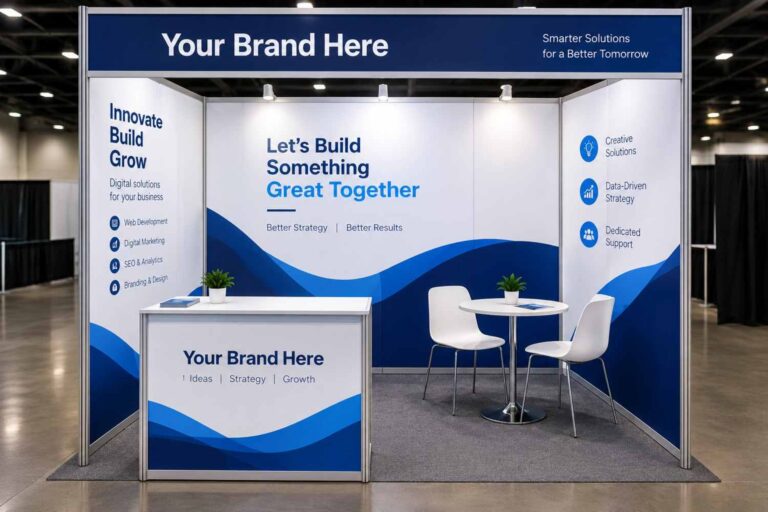
The role of graphic design in business is to build brand trust, drive conversions, and create a consistent visual identity across all customer touchpoints. Studies show website first impressions are 94% design-related, social media posts with strong visuals receive 650% more engagement than text-only content, and businesses using professionally designed content report 35% higher conversion rates, making design one of the highest-leverage investments for sustainable business growth.
What Is the Role of Graphic Design in Business?
The role of graphic design in business spans branding, marketing, communication, and customer experience. It covers everything from your logo and website to your social media visuals, sales decks, and packaging. Design isn’t decoration; it’s how your business communicates without words. A well-designed brand tells customers who you are, what you stand for, and why they should trust you before a single word is read.
How Graphic Design Influences Customer Perception
First impressions matter more than most businesses realize. Website first impressions are 94% design-related, meaning visitors judge your credibility almost entirely on visuals before reading a single word.
Why Graphic Design Importance Is Growing for Businesses
The importance has increased sharply as businesses move further into digital-first environments. Platforms like Instagram, LinkedIn, and Google are inherently visual brands that can’t compete visually simply get ignored. The numbers back this up: social media posts with strong visual design receive 650% more engagement than text-only content, making design one of the highest-leverage investments in any digital marketing strategy.
At the same time, market saturation means customers have more choices than ever. Design has become a primary differentiator. Businesses that invest in consistent, high-quality visuals stand out; those that don’t blend into the background. In 2026, weak design isn’t just an aesthetic problem; it’s a competitive disadvantage.
How Strategic Design Drives Business Growth
Strategic design aligns every visual decision with a specific business goal, whether that’s driving more leads, increasing conversions, or improving customer retention. It’s the difference between a homepage that looks nice and one that’s built to convert. Strategic design considers user flow, messaging hierarchy, CTA placement, and emotional triggers all working together to move a visitor toward action.
The business impact is measurable. Consistent brand presentation across channels increases revenue by up to 23%. Landing pages with conversion-focused design significantly outperform generic ones. Marketing materials built around a clear visual system generate stronger recall and higher engagement. Design, when treated as a strategy rather than an afterthought, directly moves revenue metrics.
Impact of Professional Graphic Design on Brand Identity
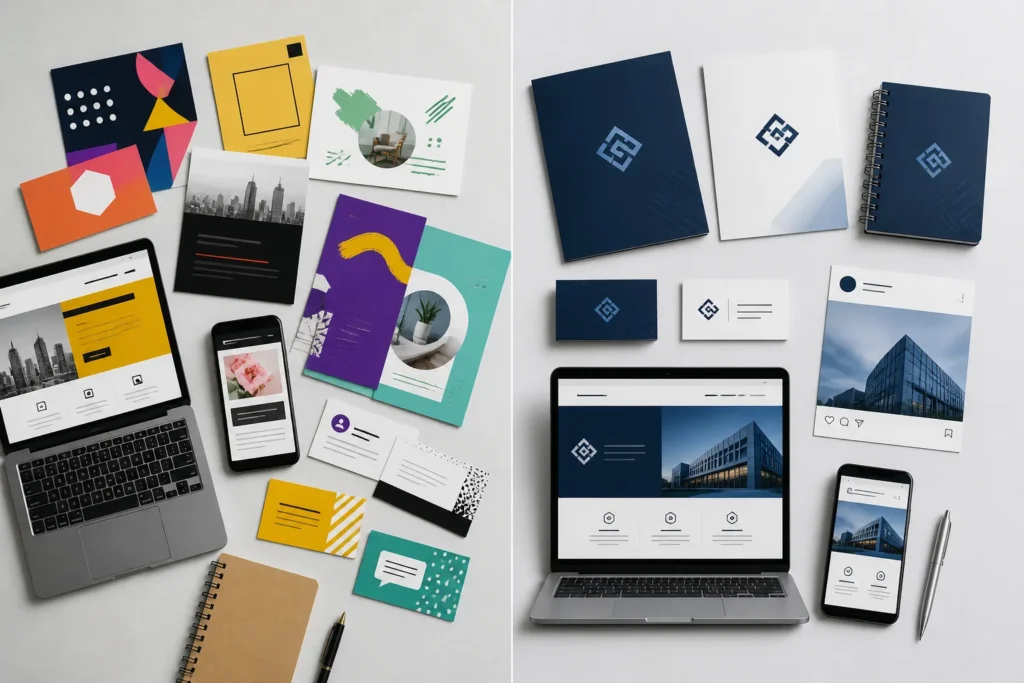
Professional graphic design creates the foundation of a recognizable, trustworthy brand. This means more than a good logo; it means a complete visual system: defined color palettes, typography hierarchy, icon styles, and usage guidelines that keep every asset consistent across every platform.
Consistency is what builds brand recognition over time. When a customer sees the same visual language on your website, your brochure, and your social posts, it reinforces familiarity and trust. Without professional design, brands end up with fragmented visuals that dilute identity and confuse audiences, making it harder to build the loyalty that sustains long-term growth.
Key Benefits of Investing in Graphic Design
- Higher engagement: Visually strong content earns more clicks, shares, and time-on-page
- Better conversions: Clear, well-designed CTAs and landing pages convert at higher rates
- Stronger brand recall: Consistent visuals make your brand easier to remember and recognize
- Increased perceived value: Quality design signals premium positioning, supporting higher price points
- Competitive advantage: In crowded markets, design is often the deciding factor between two similar offerings
This isn’t theoretical; businesses using professionally designed content report 35% higher conversion rates compared to those relying on generic or inconsistent visuals.
Common Design Mistakes That Slow Business Growth
- Inconsistent branding: Different colors, fonts, and styles across channels fragment your identity
- Poor typography: Hard-to-read fonts reduce content consumption and hurt credibility
- Low-quality visuals: Pixelated images or stock photos signal amateur execution
- Ignoring UX: Beautiful design that’s hard to navigate drives users away rather than converting them
Each of these mistakes is avoidable, and fixing them typically produces immediate, visible improvements in engagement and conversion.
At Direct Graphix, we’ve worked with businesses across Cocoa, FL, and Brevard County to build stronger brand identities through large-format printing, custom signage, sublimation, and strategic visual design. Our work spans startups building their first brand to established businesses refreshing their presence, and the results consistently show that professional design isn’t optional, it’s a growth driver.
CONCLUSION
Design is not a cost; it’s an investment with measurable returns. The role of graphic design in business growth is direct: stronger brand trust, better engagement, and higher conversions. Whether you’re a startup building your first identity or an established business refreshing your visuals, investing in quality design is one of the highest-leverage decisions you can make. Start with consistency, focus on outcomes, and treat design as strategy.
Frequently Asked Questions
Q1: How does graphic design impact business growth?
Strong design builds brand trust, improves engagement, and increases conversions, all of which directly contribute to revenue growth.
Q2: Is professional graphic design worth the cost for small businesses?
Yes. Even basic investments in a consistent logo, color palette, and templates create a more credible presence that attracts and retains customers.
Q3: What's the ROI of investing in graphic design?
Businesses with consistent branding report significantly higher revenue. Conversion-optimized design on landing pages and ads can multiply returns on ad spend.
Q4: Should I hire a designer or use in-house tools?
For core brand assets, hire a professional. For ongoing social content, tools like Canva work well once brand guidelines are established.
Q5: How does design affect SEO and digital marketing?
Good design reduces bounce rates, increases time-on-page, and improves user experience — all signals that support better search rankings and ad performance.