Choosing the right printing method can affect your project’s cost, quality, turnaround time, and overall impact. With options such as digital printing, offset printing, large format printing, and specialized printing solutions, businesses need to consider more than just the price per piece.
The best printing method depends on what you are printing, how many pieces you need, how quickly you need them, and what results you want to achieve.
What Is the Best Printing Method for Your Business?
There is no single printing method that is best for every business. The right choice depends on your project requirements, including quantity, budget, deadline, materials, personalization, and intended use.
For businesses that need short print runs, quick turnaround, or customized materials, digital printing can be a practical option. Projects requiring large quantities may benefit from a different production approach, while oversized graphics require specialized large format equipment.
Understanding your project requirements is the first step toward making the right choice.
1. Consider How Many Pieces You Need
Print quantity is one of the most important factors when choosing a printing method.
For smaller quantities, digital printing can be a practical option because it can efficiently produce short runs without the setup associated with traditional high-volume production.
For larger-volume projects, offset printing may be worth considering when you need a substantial number of consistent printed pieces.
Before choosing a method, determine whether your project requires a few dozen pieces, several hundred, or thousands.
2. Think About Your Turnaround Time
How quickly do you need your printed materials?
Some printing projects require fast production because of an upcoming event, promotion, seasonal campaign, or business deadline. In these situations, your turnaround requirements should be discussed with your printing provider before production begins.
If you have a specific deadline, ask about production time, proofing, finishing, and delivery so you can select a solution that fits your schedule.
3. Set a Realistic Printing Budget
Your budget should be based on the entire project rather than simply the cost per printed piece.
Consider:
- Quantity
- Paper or material
- Color requirements
- Finishing options
- Customization
- Production time
- Delivery
A lower price per piece does not always mean lower overall project costs. Ordering more materials than you need, selecting unnecessary finishes, or choosing a process that does not match your quantity can increase your total expense.
A professional printer can help you balance quality, quantity, and budget.
4. Decide Whether You Need Personalization
Do you want every printed piece to contain different information?
Personalized postcards, direct mail pieces, promotional materials, and targeted campaigns can benefit from variable data printing. This approach allows businesses to customize information such as names, addresses, offers, or other content.
For businesses interested in using personalization as part of their campaigns, variable data printing can help create more targeted marketing materials.
Personalization can make printed communications more relevant while helping businesses connect their message with specific customer groups.
5. Consider the Size and Application
Not every project requires traditional paper printing.
If you need large graphics for a storefront, event, trade show, vehicle, wall, or outdoor promotion, large format printing may be the appropriate solution.
Common applications include:
- Banners
- Posters
- Storefront signs
- Window graphics
- Trade show displays
- Yard signs
- Promotional displays
The intended location and viewing distance should help determine the appropriate material, size, and printing solution.
6. Think About Your Brand and Desired Finish
Your printed materials represent your business, so appearance matters.
Consider whether your project needs:
- High-quality color reproduction
- Specific paper stocks
- Glossy or matte finishes
- Special coatings
- Premium paper
- Custom sizes
- Professional finishing
For branded marketing materials, work with your printer to select a combination of printing process and materials that supports the look and feel of your brand.
7. Match the Printing Method to Your Marketing Goal
Your marketing objective should also influence your decision.
For example:
Business cards: Consider the quantity, paper stock, color requirements, and finishing options.
Brochures and flyers: Choose a solution based on campaign size, deadline, and desired presentation.
Direct mail: Consider personalization, mailing requirements, quantity, and audience targeting. Businesses can also explore professional direct mail services when printed materials need to reach customers directly.
Posters and banners: Large format solutions are generally appropriate for oversized promotional graphics.
High-volume marketing materials: Focus on consistency, production efficiency, and total project cost.
The right method is ultimately the one that supports your budget, deadline, quantity, quality expectations, and marketing objective.
How to Match Your Printing Method to Your Project
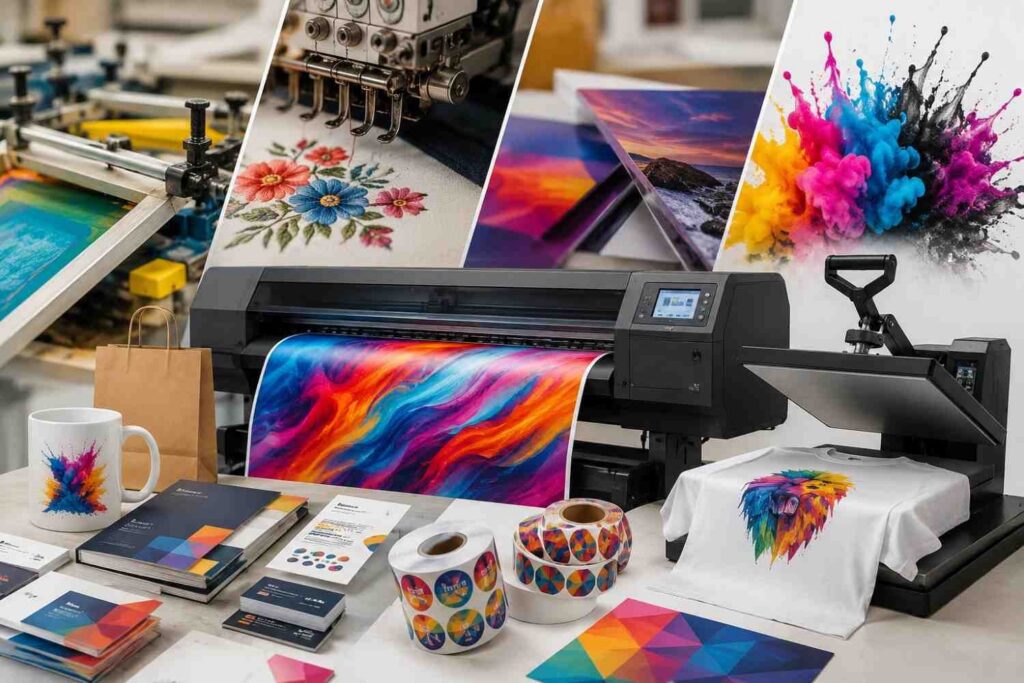
The right printing method depends on the specific requirements of your project. Instead of choosing a process based only on the type of printer, consider what you need the finished materials to accomplish.
For short-term campaigns: Choose a solution that offers efficient production and allows you to order the quantity you actually need.
For personalized marketing: Look for a printing process that supports variable information, customized messages, or targeted content.
For large-scale promotions: Consider a solution that can efficiently handle higher quantities while maintaining consistent quality.
For oversized marketing materials: Choose a solution designed for large graphics, durable materials, and indoor or outdoor applications.
For premium branded materials: Pay attention to paper stock, finishes, color quality, and other finishing options that can reinforce your brand image.
Before placing an order, share your project details with your printing provider. Explaining your quantity, deadline, budget, materials, size, and intended use can help the printer recommend a solution that fits your needs without unnecessary costs or production limitations.
Frequently Asked Questions
What factors should I consider when choosing a printing method?
Consider your print quantity, budget, turnaround time, personalization requirements, material, size, finishing needs, and marketing objective.
What printing method is best for small business marketing?
The best option depends on the project. Businesses should consider the number of pieces required, deadline, budget, personalization needs, and the type of marketing material being produced.
How do I choose a printing method for a large marketing campaign?
Start by determining the required quantity, production deadline, material, quality expectations, and budget. A professional printing provider can then recommend an appropriate solution.
What printing method is best for banners and signs?
Start by reviewing their portfolio and previous client work. Consider their design style, industry experience, communication, turnaround time, pricing, and ability to understand your brand before making a decision.
Can a printing company recommend the right printing method?
Yes. A professional printing provider can review your project’s quantity, deadline, budget, materials, and intended use to help determine the most appropriate printing solution.
Choose the Right Printing Solution for Your Business
Choosing a printing method starts with understanding your project’s requirements. Instead of selecting a process based only on price, consider quantity, quality, turnaround time, personalization, size, materials, and marketing goals.
The right printing solution can help you produce professional materials while making the most of your marketing budget. If you’re unsure which option is right for your project, Direct Graphix can help you evaluate your printing needs and find a solution that fits your goals. Contact Direct Graphix today to discuss your next printing project.