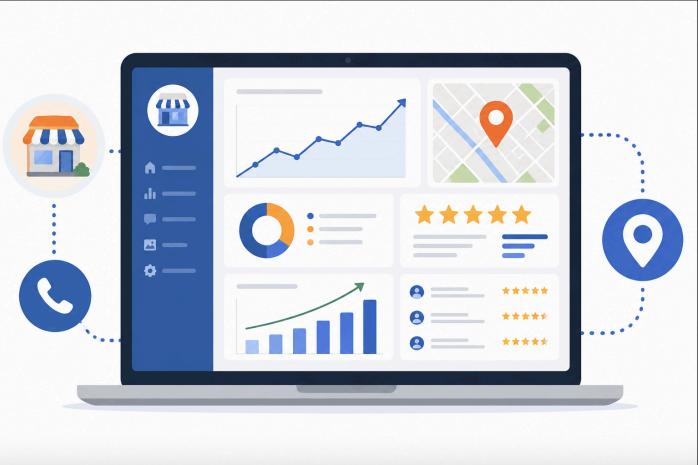
Web design trends in 2026 are defined by one clear shift: websites must now perform for both human visitors and AI-powered search systems simultaneously — or risk losing visibility, trust, and conversions to competitors who do. The most impactful trends this year include AI-driven personalization, clarity-first minimalist layouts, accessibility-ready architecture meeting WCAG 3.0 standards, hyper-fast Core Web Vitals performance, and content structures optimized for citation in Google AI Overviews, ChatGPT, and Perplexity. For small and mid-sized businesses in Cocoa, FL — from contractors and real estate companies to restaurants, retailers, and service businesses across Brevard County — adopting these design principles isn’t optional; it’s what determines whether your website generates leads or quietly loses them. This guide breaks down the twelve most consequential web design trends shaping Florida businesses in 2026 and how to apply each one.
Why Web Design Trends Matter for Business Growth in 2026
The way people interact with websites is changing faster than ever. With AI-driven search, zero-click browsing, and rising user expectations, 2026 has become a defining year for web design innovation.
As a Florida-based digital strategist working closely with local businesses, agencies, and nationwide brands, I’ve analyzed hundreds of emerging UI/UX patterns, competitor trends, data-backed reports, and AI-driven design shifts. From purposeful motion design to personalized dynamic content, this guide brings together the most accurate, practical, and future-proof web design trends for 2026.
If you’re a business owner, designer, or marketer targeting the U.S. market, this guide will help you understand:
- What modern users expect
- Why certain design elements convert better
- How AI, personalization, and accessibility will redefine web design
- Which trends actually matter (not just visual hype)
Top Web Design Trends in 2026 Driving UX and Conversions
Modern web design in 2026 goes far beyond visuals—it focuses on performance, user experience, SEO, and conversions. At Direct Graphix, our professional web design services in Florida are built around the most impactful web design trends shaping U.S. businesses today, including mobile-first layouts, fast-loading pages, and accessibility-ready experiences aligned with WCAG compliance. We also integrate thoughtful motion design to enhance usability and guide users without compromising speed or performance.
1. AI-Powered Personalization Becomes the New Standard
Websites are no longer static. In 2026, AI-driven personalization is the biggest shift.
Your website can now:
- Show content based on user behavior
- Suggest services using AI
- Adjust layouts based on engagement
- Predict user needs using machine learning
Example:
- A medical website design in Florida can show:
- Appointment options for returning users
- Emergency services for mobile visitors
- Insurance information for local patients
This makes the user experience more relevant—and dramatically increases conversions.

2. Minimalist “Clarity-First” Design
2026 marks the end of noisy, overly animated websites.
Users want fast, simple, clear, and distraction-free layouts.
Trends include:
- Large readable fonts
- Clean whitespace
- Subtle micro-interactions
- Simple color palettes
- Zero unnecessary elements
Good design is now clarity, not decoration.
3. Medical, Legal & Service Websites Shift to Trust-Based UI
Especially in the U.S. market, trust is the #1 conversion factor in industries like:
- Healthcare
- Home services
- Legal services
- Real estate
- Finance
Strong E-E-A-T design principles include:
- Real staff images
- Verified reviews
- HIPAA/GDPR-ready forms
- Clear proof of experience
- Certifications and badges
For medical website design specifically, expect:
- Soft colors
- Simplified navigation
- Symptom-based search
- Accessible appointment flows
This design trend isn’t aesthetic — it’s built on user psychology.
4. Micro-Animations for Better Storytelling
Micro-animations have evolved from decoration to purpose-driven UX tools.
Uses in 2026:
- Guiding users to CTAs
- Showing progress
- Making form completion easier
- Demonstrating services visually
When used properly, they increase user satisfaction and reduce bounce rates.
5. “Trend Web”: AI-Synthesized Design Concepts
2026 introduces a new phenomenon called Trend Web, where AI suggests:
- Layouts
- Color palettes
- UX patterns
- Content blocks
- Icon sets
LLMs like GPT-5, Gemini, and Claude generate ideas instantly, speeding up creative workflows for designers in Florida agencies and U.S.-based studios.

6. Immersive, High-Performance 3D Elements (Only Where It Matters)
3D on websites is no longer heavy or slow.
Due to lightweight WebGL frameworks, businesses can now use:
- Product 3D views
- Interactive models
- 3D icons
- Floating illustrations
These are especially effective for:
- Tech startups
- E-commerce
- Architecture & real estate
- Automotive
But the rule is clear:
3D must increase clarity, not add complexity.
7. Hyper-Fast Website Performance (Core Web Vitals 3.0)
Google’s ranking systems in 2026 heavily reward:
- Sub-1.5 second load time
- Image compression
- Code minification
- Clean CSS frameworks
- AI-powered CDN routing
Fast websites:
- Rank higher
- Convert higher
Speed is a top-ranking factor for both SEO and LLM optimization.
8. Interactive Content: Calculators, Tools & Dynamic Blocks
Static blogs are out — interactive content is in. In fact, some of the highest-traffic websites in 2026 are built around interactive website ideas like ROI calculators, budget estimators, and real-time quote tools — not just written content.
Examples:
- ROI calculators
- Budget estimators
- Interactive FAQs
- Customizable product previews
Users stay longer, engage more, and AI systems see your website as “value-rich.”
9. Accessibility-First Design (Now Legally Critical)
WCAG 3.0 updates in 2026 make accessibility not just ethical — but legally necessary.
Key changes include:
- High contrast mode
- Keyboard-friendly navigation
- Text scaling
- Screen reader optimization
- Clear button states
In states like Florida, ADA compliance lawsuits have skyrocketed in 2025–2026.
10. Scroll-Triggered Storytelling
High-performing websites now use:
- Progressive content reveal
- Parallax storytelling
- Section-based narratives
This works extremely well for:
- Luxury brands
- Property developers
- Medical facilities
- Corporate portfolios
It increases emotional connection and user retention.
11. Verified Content Blocks for AI Overviews
This is a major LLMO trend for 2026.
We now design content so AI can cite it directly, using:
- Question-based H2s
- Short, factual explanations
- Numbered steps
- Data tables
- Clear expert quotes
This makes your website more likely to appear in:
- ChatGPT answers
- Google AI Overviews
- Perplexity citations
- Gemini summaries
This strategy is what businesses must apply now to avoid disappearing in zero-click search.
12. Industry-Specific Website Design Packages Rise in Demand
Businesses no longer want generic packages.
They want industry-optimized website design packages, especially in:
- Medical
- Service-based businesses
- Manufacturing
- Real estate
- SaaS
Expect packages that include:
- AI personalization
- SEO + LLMO optimization
- Brand storytelling
- Appointment systems
- ADA compliance
- Speed optimization
This trend is exploding across Florida agencies.
Why Are These Web Design Trends Important in 2026?
Because users no longer browse traditionally.
They:
- Scan
- Skim
- Expect instant clarity
- Want personalized information
- Prefer trusted digital experiences
And with AI becoming a new search engine, your website must be:
- Structurally clear
- E-E-A-T rich
- Factually precise
- Easy for LLMs to cite
This is the new visibility formula.
How Florida Businesses Can Apply These Trends in 2026
Florida’s digital market is highly competitive in industries like:
- Home services
- Healthcare
- Tourism
- Real estate
- Legal services
- Hospitality
To stand out, local businesses should focus on:
- Fast-loading mobile design
- Trust-building elements
- Geo-targeted personalization
- Industry-specific components
- Clean, modern aesthetics
- Strong content hubs
- AI-ready formatting
These trends directly increase leads and conversions.
Conclusion
2026 is the year web design becomes:
- Smarter
- Cleaner
- More human-centric
- AI-compatible
- Story-driven
- Performance-optimized
If your website doesn’t adapt to these evolving 2026 website design trends—especially AI-driven personalization and trust-focused user experience—you risk losing search visibility in Google and reduced exposure in AI-generated answers. Our web design services ensure your website leverages website automation to deliver personalized experiences and follows WCAG compliance standards, helping your business stay competitive, discoverable, and conversion-ready in 2026 and beyond. Get in touch with us today to upgrade your website and stay ahead of the competition.
But if you implement them early, your brand gains a powerful competitive edge in the Florida and U.S. markets.
Frequently Asked Questions (FAQs)
1. What are the most important web design trends in 2026 for U.S. and Florida businesses?
The most important web design trends in 2026 include AI-powered personalization, trust-based UX design, accessibility-first layouts, hyper-fast performance optimized for Core Web Vitals 3.0, and AI-citable content structures. For Florida businesses, these trends are critical because Google and AI search engines now prioritize websites that demonstrate expertise, trust, speed, and localized relevance. Businesses that fail to adopt these trends risk losing rankings, visibility in AI-generated answers, and lead conversions.
2. How does AI-powered personalization improve website rankings and conversions in 2026?
AI-powered personalization improves rankings and conversions by dynamically adapting content, layouts, and CTAs based on user behavior, location, and intent. In 2026, Google and AI systems reward websites that deliver personalized, relevant experiences because they reduce bounce rates and increase engagement signals. For example, Florida service-based websites using AI personalization see higher local conversion rates by showing geo-targeted services, appointment options, and trust signals tailored to each visitor.
3. Why is trust-focused UX design critical for medical, legal, and service websites in 2026?
Trust-focused UX design is critical because industries like healthcare, legal, and home services fall under Google’s high E-E-A-T standards. In 2026, websites without clear trust indicators—such as verified reviews, real staff profiles, certifications, compliance-ready forms, and transparent credentials—struggle to rank and convert. AI-driven search engines actively filter out low-trust websites, making trust-based UI a ranking necessity, not a design choice.
4. How do web design trends in 2026 affect visibility in Google AI Overviews and ChatGPT answers?
Web design trends in 2026 directly affect AI visibility because LLMs prioritize websites with structured, factual, and verifiable content. Websites using question-based headings, concise explanations, data-backed sections, and expert signals are more likely to be cited in Google AI Overviews, ChatGPT, Gemini, and Perplexity. Without AI-ready formatting and clear information architecture, even high-quality websites risk disappearing in zero-click and AI-driven search results.
5. How can Florida businesses future-proof their website for SEO, AI search, and local competition?
Florida businesses can future-proof their websites by combining fast mobile-first design, AI personalization, ADA-compliant accessibility, trust-focused UX, and geo-targeted content optimized for both SEO and AI engines. In competitive Florida markets like healthcare, real estate, tourism, and home services, websites must be designed not just for users—but for AI interpretation, local intent, and credibility signals. Early adoption of these trends gives businesses a measurable advantage in rankings, leads, and long-term visibility.